
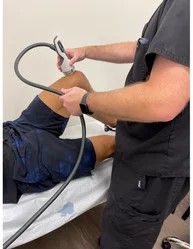
Focused shockwave therapy is an excellent technique that can be used to treat a wide array of injuries, including plantar fasciitis, tennis elbow, and many more. It’s fantastic for athletes and everyday people for its many advantages, including the fact that it’s a non-invasive treatment. However, it may take some time for patients to experience the full results of their treatment. So, how long does shockwave therapy take to work? Let’s review some of the factors that can influence the time it takes for you to feel better following your focused shockwave therapy.
How Shockwave Therapy Works in the Body
Focused shockwave therapy uses targeted acoustic waves to stimulate healing in damaged or chronically inflamed tissues. These high-energy sound waves are delivered precisely to the affected area, where they trigger a series of beneficial biological responses. In simple terms, shockwave therapy helps “wake up” tissue that has stalled in the healing process.
When tissue is injured, whether in a tendon, ligament, fascia, or muscle, the body normally responds with inflammation, increased blood flow, and cellular repair. However, in chronic conditions like plantar fasciitis or longstanding tendonitis, the healing process often becomes incomplete or disorganized. The tissue may remain inflamed, weakened, or structurally compromised.
Shockwave therapy treats pain by stimulating:
- Improved circulation to the treated area
- Increased cellular activity and metabolism
- Collagen production, which strengthens connective tissue
- Breakdown of calcifications or scar tissue in certain conditions
It’s important to note that because shockwave therapy works at the cellular and tissue level, improvement is not always instantaneous. Just as it takes time for tissue to become injured and degenerate, it takes time for regeneration to occur. The therapy initiates healing, but your body still needs time to rebuild and remodel the tissue properly.
How Long Does Shockwave Therapy Take to Work?
While the procedure itself is relatively quick — partly because it isn’t an invasive treatment that requires surgery — how long shockwave therapy takes to work can vary greatly depending on the circumstances.
Factors That Influence Shockwave Therapy Recovery Time
- The Severity and Duration of the Condition: A recent injury may respond more quickly to treatment than a condition that has been present for years. This is because chronic degeneration often requires more time for tissue regeneration and remodeling.
- The Specific Area Being Treated: Certain areas of the body, such as the plantar fascia or Achilles tendon, may have limited blood supply, which can naturally slow healing. Shockwave therapy, therefore, will take longer to take effect.
- Your Overall Health and Healing Capacity: Your body’s ability to repair tissue depends on overall health factors, including circulatory health, nutritional status, metabolic conditions, smoking status, and age. Patients who support healing through proper nutrition, hydration, and healthy habits often experience more efficient recovery after shockwave therapy.
- Your Adherence to Recommended Care Plans: Shockwave therapy is often most effective when combined with complementary strategies, such as targeted exercises, activity modification, stretching, and supportive footwear or orthotics. Following your personalized treatment recommendations can significantly influence your recovery timeline and overall outcome.
- Your Activity Levels: Returning too quickly to high-impact or repetitive activities can delay progress. Conversely, appropriate movement and gradual return to activity can enhance recovery.
Because these factors vary from person to person, how long shockwave therapy takes to work is individualized. During your consultation at Dr. David W. Nadler & Associates, we will carefully assess your condition and medical history to provide a realistic expectation tailored specifically to you.
When Patients Typically Begin to Notice Improvement
While every patient’s experience is unique, there are general patterns we commonly observe.
Some patients report noticeable pain reduction after their first or second session. This early improvement is often due to increased blood flow and modulation of pain signals. For these individuals, the relief can feel encouraging and motivating.
However, for many others, improvement is more gradual.
A typical shockwave therapy recovery timeline looks like this:
- After 1-2 Sessions: Some patients feel mild relief or changes in pain intensity. Others may notice little change at this stage.
- After 3-4 Sessions: Many patients begin to report clearer improvement in pain levels and function.
- Over Several Weeks Following Treatment: Continued healing and tissue remodeling often lead to progressive symptom reduction.
It’s important to understand that shockwave therapy is not a quick fix. It is a regenerative process. In some cases, patients experience the most meaningful improvements several weeks after completing their treatment series, as collagen production and tissue repair continue.
For chronic conditions that have been present for months or even years, it is reasonable to expect that shockwave therapy may take several months to a year to reach its conclusion.
What to Expect During and After Shockwave Therapy
Patients are often relieved to learn that shockwave therapy is non-invasive and typically performed in-office without the need for anesthesia or downtime.
Shockwave Therapy Treatment Sessions
While treatment plans are customized, many patients undergo three to six sessions, spaced approximately one week apart. Each session generally lasts about 20-30 minutes, depending on the area being treated.
During the procedure, you may feel mild to moderate discomfort as the acoustic waves are applied. However, most patients tolerate treatment well, and the intensity can be adjusted for comfort.
After Shockwave Therapy Treatment
It is common to experience:
- Mild soreness
- Temporary redness or tenderness
- A feeling similar to post-exercise discomfort
These effects are typically short-lived and often indicate that the healing response has been activated.
It’s helpful to note that one of the greatest benefits of shockwave therapy is that improvement often continues even after the final session. Because the treatment stimulates tissue regeneration, your body may continue producing collagen and remodeling damaged tissue for weeks following the last appointment. Many patients find that they feel progressively better over the course of one to three months after completing therapy.
For Professional Shockwave Therapy Treatments, Contact Dr. Nadler Today
If you want to learn how long shockwave therapy will take to work for your particular injury, start by speaking with an expert like Dr. David Nadler. He offers professional focused shockwave therapy for physical therapy, as well as other services pertaining to chiropractic care in the Greater Philadelphia area from our Newtown Square office. For more information and to schedule your appointment, reach out today.
Frequently Asked Questions
Does shockwave therapy work?
Yes, shockwave therapy has been shown to be highly effective for many chronic musculoskeletal conditions, particularly those involving tendons and soft tissues. It is commonly used to treat plantar fasciitis, Achilles tendonitis, tennis elbow, shoulder tendinopathies, and other overuse injuries that have not responded to conservative treatments.
Clinical research and real-world patient outcomes both support its effectiveness. By increasing blood flow, enhancing cellular repair, and encouraging collagen production, it addresses the underlying tissue dysfunction rather than simply masking symptoms.
That said, results depend on accurate diagnosis, appropriate treatment planning, and individual healing capacity. During your consultation at Dr. David W. Nadler & Associates, we evaluate whether you are an ideal candidate and outline realistic expectations for your specific condition.
Does shockwave therapy hurt?
Most patients tolerate shockwave therapy very well. During treatment, you may feel a tapping or pulsing sensation as the acoustic waves are delivered to the affected area. For some individuals, especially when treating highly sensitive or inflamed tissue, the sensation can feel mildly to moderately uncomfortable.
However, the intensity can be adjusted to ensure your comfort while still delivering therapeutic benefit. Treatments are brief (typically lasting 10 to 20 minutes) and do not require anesthesia.
After the session, it is common to experience temporary soreness, similar to what you might feel after a workout. This mild discomfort generally resolves within a day or two and is often a sign that the body’s healing response has been activated.
How many shockwave therapy sessions will I need?
While treatment plans are personalized depending on the severity, duration, and location of their condition, many patients benefit from five to six sessions spaced about one week apart.
Some patients begin noticing improvement after the first few sessions, while others experience gradual progress over time. Continued healing often occurs for several weeks after the final session, as tissue regeneration continues.
Are there any side effects of shockwave therapy?
Shockwave therapy is non-invasive and considered very safe when administered by a trained provider. Side effects are typically mild and temporary. These may include:
- Mild soreness or tenderness
- Temporary redness or swelling
- Slight bruising in rare cases
During your evaluation, we review your medical history to ensure the treatment is appropriate and safe for you.
How long do the results of shockwave therapy last?
Because shockwave therapy stimulates true tissue repair, many patients experience long-lasting relief once healing is complete. However, maintaining results often depends on addressing contributing factors such as biomechanics, activity patterns, or repetitive strain.